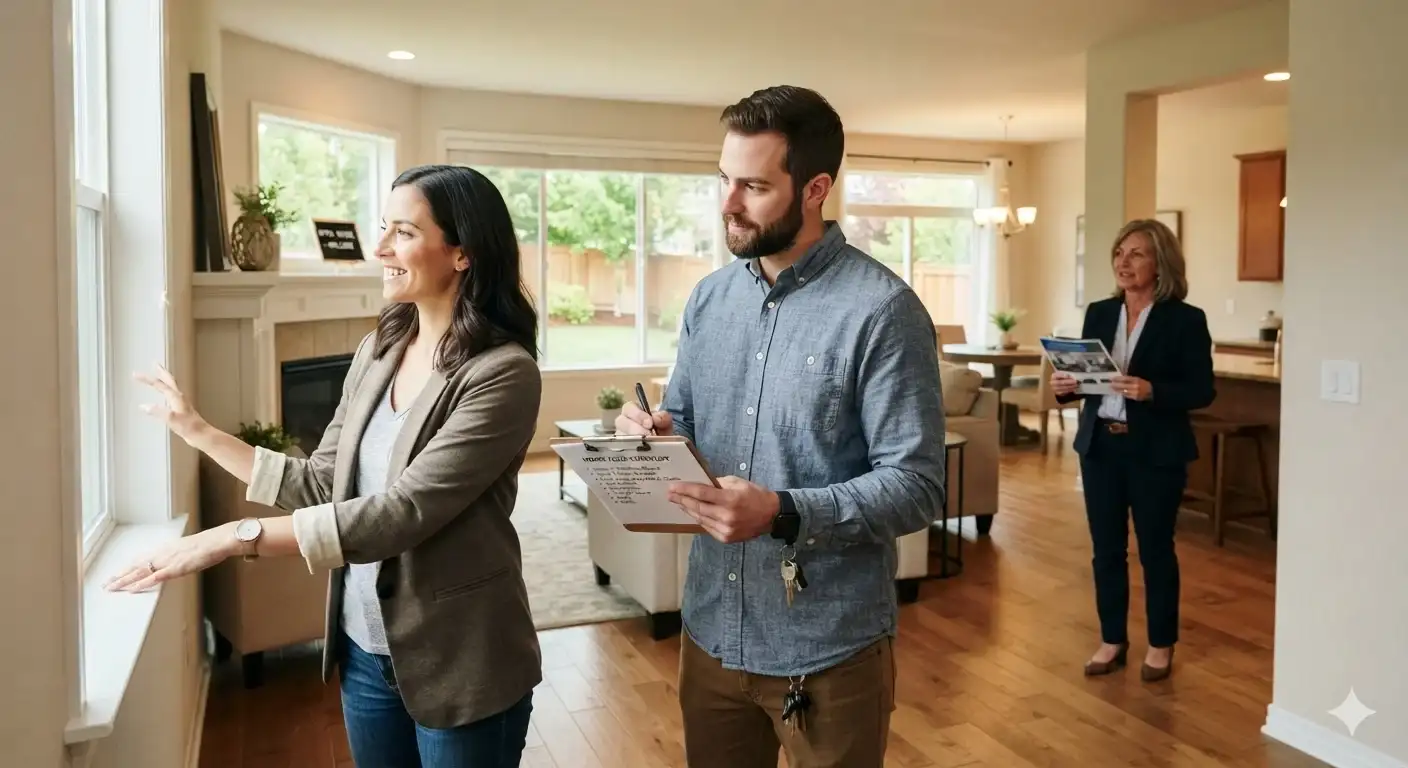
By Garrett Odell · October 2, 2026
What Should You Look for When Touring a Home?
Touring a home is one of the most exciting parts of buying real estate, but it is also one of the most important opportunities to look beyond appearances. A freshly painted living room, updated kitchen, and attractive staging can make a great first impression, but they do not necessarily tell you how well a home has been maintained or what it might cost to own.
When touring a home in Charlotte, Davidson, Cornelius, Huntersville, Mooresville, Denver, Concord, Kannapolis, Harrisburg, University City, or South Charlotte, buyers should pay close attention to the home’s condition, layout, major systems, location, and potential maintenance costs.
At Odell Realty, our team has helped buyers navigate the Greater Charlotte real estate market for decades. We know what to look for during a showing, which questions to ask, and how to help buyers recognize potential concerns before they become costly surprises. Our job is not simply to help you find a home you love. It is to help you make an informed decision that aligns with your goals, budget, and long-term plans.
Here is what to look for when touring a home, along with insights from our experienced local real estate team.
Key Takeaways: What to Look for When Touring a Home
Before getting into the details, here are the most important things to evaluate during a showing:
- Structural condition: Look for cracks, uneven floors, signs of water intrusion, and other potential warning signs.
- Roof and major systems: Pay attention to the age and apparent condition of the roof, HVAC system, plumbing, and electrical components.
- Layout and functionality: Consider whether the floor plan works for your daily routine, furniture, storage needs, and future plans.
- Water damage and moisture: Check ceilings, windows, bathrooms, basements, and crawl spaces for signs of leaks or excessive moisture.
- Location and surroundings: Evaluate traffic, noise, neighboring properties, commute routes, and nearby amenities.
- Potential expenses: Consider repairs, renovations, HOA dues, property taxes, and ongoing maintenance.
- Resale potential: Think about how the home’s features and location may appeal to future buyers.
- Professional guidance: Work with an experienced local real estate team that can help you evaluate the property, identify concerns, and navigate the buying process.
A home does not have to be perfect to be a good purchase. The key is understanding what you are buying and identifying potential costs before committing.
1. Look Beyond the Cosmetic Updates
One of the biggest mistakes buyers make when touring homes is focusing too heavily on cosmetic features.
New countertops, modern light fixtures, fresh paint, and updated flooring can make a property feel move-in ready. However, these improvements do not necessarily indicate that the home’s underlying systems have been maintained.
When touring a home, look beyond the finishes and consider:
- Are the walls and ceilings free of significant cracks or discoloration?
- Do the floors feel level and stable?
- Do doors and windows open and close properly?
- Are there visible signs of water damage?
- Does the home appear to have been maintained consistently?
- Do the renovations look professionally completed?
In the Greater Charlotte market, buyers will encounter everything from older homes with original features to recently renovated properties and brand-new construction.
An older home in Kannapolis or Concord may have tremendous character but require updates to its plumbing, electrical system, or other components. Meanwhile, a beautifully renovated home in Huntersville or South Charlotte may still have underlying issues that are not immediately visible.
How Odell Realty helps: Our agents bring an experienced perspective to every showing. We help buyers distinguish between cosmetic improvements and potential maintenance concerns, ask the right questions about renovations, and determine when additional investigation may be warranted. While we are not home inspectors, our experience helps us recognize when something deserves a closer look.
2. Pay Attention to the Roof, HVAC, Plumbing, and Electrical Systems
Major home systems can be some of the most expensive components to repair or replace. While a standard showing is not a substitute for a professional inspection, buyers should make a point of asking about these items.
Roof
Look for visible signs of damage, missing shingles, sagging areas, or evidence of previous repairs.
Ask the listing agent or seller:
- How old is the roof?
- Has it been repaired or replaced recently?
- Is there documentation of the work?
- Have there been any known leaks?
In North Carolina, roof condition is particularly important because homes experience seasonal storms, heavy rainfall, and periods of high humidity.
HVAC System
Heating and air conditioning are essential in the Charlotte area, where summers can be hot and humid.
Check whether the system appears to operate properly during the showing, and ask about its age and maintenance history.
A newer HVAC system can provide peace of mind, while an older system may represent a significant future expense.
Plumbing
Check faucets, toilets, and visible plumbing fixtures for leaks or unusual operation.
Look under sinks for signs of moisture, water damage, or previous repairs. If the property has a crawl space, slab foundation, or older plumbing, these details deserve additional attention during the inspection process.
Electrical
Look for damaged outlets, exposed wiring, outdated electrical components, or other visible concerns.
Older homes may have electrical systems that require additional evaluation, particularly if significant renovations or additions have been completed.
How Odell Realty helps: Our team knows which questions to ask about major systems and how to help buyers evaluate the information provided by sellers. We can also recommend qualified local inspectors and help coordinate the inspection process so you have the information needed to make an informed decision.
Remember, a professional home inspection is the appropriate time to have these systems evaluated in greater detail.
3. Watch for Signs of Water Damage and Moisture
Water is one of the most important things to look for when touring a home.
Water intrusion can lead to costly repairs and may contribute to wood rot, damaged drywall, and mold growth.
During your showing, pay close attention to:
- Brown or yellow stains on ceilings
- Peeling paint or bubbling drywall
- Musty odors
- Discoloration around windows
- Soft or damaged flooring
- Signs of water in the basement or crawl space
- Improper drainage around the foundation
- Visible moisture under sinks or near appliances
In the Charlotte area, humidity and heavy rainfall make moisture management especially important.
For homes with crawl spaces, buyers should ask about moisture barriers, drainage, and any history of water intrusion. For properties with basements, particularly in areas around Lake Norman, check for signs of seepage or previous water-related repairs.
A musty smell does not automatically mean a home has a serious problem, but it is worth investigating rather than overlooking.
Our local insight: We have seen how seemingly minor moisture concerns can become significant issues when left unaddressed. During showings, our agents help buyers identify visible warning signs and determine when a specialist should evaluate the property before the due diligence period ends.
4. Evaluate the Floor Plan and Everyday Functionality
A home can look beautiful online but feel completely different in person.
As you walk through the property, think about how you would actually use each space.
Consider the following:
- Does the kitchen flow well into the living and dining areas?
- Is there enough storage?
- Are the bedrooms appropriately sized?
- Is there a practical home office space?
- Does the laundry room have convenient access?
- Is there enough room for your furniture?
- Does the home offer flexibility for future needs?
- Is the primary bedroom located where you would prefer?
For families, consider how the layout supports everyday activities. A home with an open living area may be appealing, while another buyer may prioritize separate spaces for working, relaxing, or entertaining.
For buyers relocating to the Charlotte area, it is also worth considering whether the home’s layout fits your lifestyle today and how it may accommodate changes over the next several years.
A home should work for your life, not just look good in photographs.
Our team takes time to understand your priorities before touring properties. That way, we can help you focus on homes that make sense for your lifestyle rather than wasting time on properties that may look appealing online but fall short in person.
5. Evaluate the Lot, Drainage, and Outdoor Space
It is easy to spend an entire showing inside a home and forget that the lot is just as important.
Before leaving the property, take time to walk around the exterior, if permitted.
Look for:
- Drainage patterns and areas where water collects
- The condition of retaining walls
- Trees or large branches near the home
- Fence condition and property boundaries
- Signs of erosion
- The slope of the yard
- Privacy from neighboring properties
- The condition of decks, patios, and outdoor structures
In communities around Denver, Mooresville, and Lake Norman, buyers may encounter larger lots, wooded properties, and homes with well and septic systems.
These properties can offer additional space and privacy, but they may also require more attention to drainage, landscaping, septic maintenance, and other property-specific considerations.
In established neighborhoods throughout Charlotte, Concord, and Kannapolis, mature trees and landscaping can add character, but buyers should also consider the maintenance involved.
How Odell Realty helps: Our local knowledge allows us to help buyers understand the differences between property types and locations. We can flag questions about lot boundaries, drainage, septic systems, and other property-specific considerations and help you connect with the appropriate professionals when further evaluation is needed.
Do not overlook the backyard simply because the kitchen is impressive.
6. Consider the Neighborhood and Commute
When purchasing a home, you are buying more than the structure. You are also choosing a location that will shape your daily routine.
A home that checks every box inside may not be the right fit if the surrounding area does not support your lifestyle.
During your showing, consider:
- How long does it take to reach your workplace?
- Are major roads easily accessible?
- Is there significant traffic during peak hours?
- Are nearby roads noisy?
- How close are grocery stores, restaurants, and other everyday conveniences?
- Are there parks, greenways, or recreational amenities nearby?
- Does the neighborhood have an HOA?
- Are there planned developments or construction projects nearby?
For example, buyers considering Huntersville, Cornelius, or Davidson should evaluate their commute along I-77 and nearby routes. Those looking in Concord, Kannapolis, or Harrisburg may want to compare access to I-85 and other major roads.
In University City, access to I-85, I-485, and the LYNX Blue Line may be important depending on where you work and how you travel.
Buyers exploring South Charlotte should consider access to I-485, SouthPark, Ballantyne, and other employment and shopping destinations.
Pro tip: If you are seriously considering a home, drive through the neighborhood at different times of day. A quiet Saturday afternoon may not reflect weekday traffic or evening activity.
The Odell Realty advantage: We live and work in the Greater Charlotte region and understand the differences between its communities. Our team can help you compare neighborhoods based on commute, home styles, amenities, property taxes, and your specific priorities. We want you to feel confident about not only the home you choose but also the community you are joining.
7. Look for Signs of Deferred Maintenance
Deferred maintenance refers to repairs or upkeep that have been postponed over time.
A home with deferred maintenance is not automatically a bad purchase, but buyers should understand what needs attention and how much it may cost.
Common examples include:
- Peeling exterior paint
- Damaged siding
- Worn or deteriorating deck boards
- Gutters that appear damaged or improperly maintained
- Overgrown landscaping
- Cracked caulking around windows and doors
- Loose handrails
- Damaged flooring
- Aging appliances
- Unfinished repairs
When touring a property, try to distinguish between cosmetic improvements and necessary repairs.
A home that needs new paint and updated fixtures may be a very different financial proposition from one that needs a new roof, HVAC system, and extensive moisture remediation.
Buyers should consider their available budget, renovation experience, and willingness to manage projects after closing.
How we help: Our agents help buyers assess the potential impact of visible repairs and consider how those items fit into the overall purchase. We can help you prioritize questions, discuss potential negotiation strategies, and work through the available options after inspections reveal additional concerns.
8. Think About Resale Value Before You Buy
Even if you plan to stay in your next home for many years, resale potential is worth considering.
Life circumstances can change, and you may eventually need to sell sooner than expected.
When evaluating a property, consider:
- Is the location appealing to a broad range of buyers?
- Does the floor plan have practical functionality?
- Are there unusual features that may limit future buyer interest?
- Is the home priced appropriately compared with similar properties?
- Are there significant maintenance concerns?
- Does the property have features that may support long-term demand?
In the Greater Charlotte market, neighborhood, location, property condition, and proximity to employment centers and amenities can all influence buyer interest.
For instance, a home near downtown Davidson offers a different set of features than a newer construction home in Concord or a property with lake access in Mooresville. Understanding those differences is important when evaluating both your immediate needs and future resale considerations.
No one can guarantee how much a home will appreciate, but evaluating its location, condition, and market position can help you make a more informed purchase.
Our perspective: Because Odell Realty works with both buyers and sellers, we bring insight from both sides of the transaction. We help buyers consider not only what makes a home attractive today but also the features, location, and condition that may matter when it is time to sell.
9. Ask the Right Questions During the Showing
A showing is your opportunity to gather information that may not be obvious from the listing description.
Do not hesitate to ask questions. Your real estate agent can help you obtain additional details from the listing agent or seller.
Here are some questions worth asking:
- How long has the home been on the market?
- Have there been any previous offers?
- Why is the seller moving?
- How old are the roof and HVAC system?
- Have there been any known water intrusion issues?
- What major improvements have been completed?
- Are permits available for significant renovations or additions?
- What are the monthly HOA dues, if applicable?
- Are there any known restrictions on the property?
- Are there any known issues that may affect the home’s condition or use?
In North Carolina, sellers generally provide a Residential Property and Owners’ Association Disclosure Statement, subject to applicable exemptions. Buyers should review the available disclosures carefully and ask follow-up questions when something is unclear.
Your agent can also help you understand which questions need to be addressed before submitting an offer and which items can be investigated during due diligence.
This is where having an experienced agent matters. At Odell Realty, we do more than schedule showings. We communicate with listing agents, review available property information, help you understand disclosures, and advocate for your interests throughout the transaction. Our goal is to make sure you have the information you need to move forward with confidence.
10. Understand What a Showing Can and Cannot Tell You
One of the most important things to remember is that a showing is not a home inspection.
Even experienced real estate agents cannot identify every hidden defect simply by walking through a property.
A showing helps buyers identify visible concerns, evaluate the home’s overall appeal, and determine whether it is worth pursuing.
A professional home inspection provides a more detailed evaluation of the property’s accessible systems and components.
Depending on the home, buyers may also consider:
- Termite or wood-destroying insect inspections
- Radon testing
- HVAC evaluations
- Septic inspections
- Well water testing
- Structural evaluations
- Roof inspections
- Sewer scope inspections
Not every property requires every inspection. Your agent can help you determine which evaluations may be appropriate based on the home’s age, construction, location, and visible conditions.
In North Carolina, the due diligence period is particularly important because it gives buyers an opportunity to investigate the property and make informed decisions before proceeding toward closing.
Understanding your rights, deadlines, and financial obligations during this period is essential.
For more information about the process, explore our guide to buying a home in North Carolina.
From the first showing through closing, Odell Realty is in your corner. We help coordinate inspections, track important deadlines, communicate with all parties, review new information as it becomes available, and help you navigate decisions when unexpected issues arise. Our hands-on approach means you have an experienced team to turn to at every stage of the process.
A Home Touring Checklist for Buyers
Use this checklist during your next showing to keep your priorities organized.
Inside the Home
- Check ceilings and walls for stains or cracks.
- Look for signs of water damage or moisture.
- Test faucets and flush toilets.
- Open and close windows and doors.
- Evaluate the condition of flooring.
- Check storage space and closet sizes.
- Consider furniture placement and room functionality.
- Ask about the age of major systems and appliances.
Outside the Home
- Inspect the visible condition of the roof.
- Look for drainage concerns around the foundation.
- Check siding, gutters, and exterior trim.
- Walk the yard and evaluate the lot.
- Look at decks, patios, fences, and retaining walls.
- Consider neighboring properties and privacy.
- Evaluate street parking and driveway access.
Location and Financial Considerations
- Drive the commute route.
- Check nearby traffic and noise.
- Review property taxes.
- Ask about HOA dues and restrictions.
- Consider insurance and maintenance expenses.
- Compare the home with similar properties.
- Identify potential repairs or renovations.
- Discuss resale considerations with your agent.
You do not need to find a home that checks every single box. Instead, use the checklist to separate your must-haves from your nice-to-haves and identify any concerns that deserve further investigation.
Your Odell Realty agent can help you work through this list, compare homes objectively, and keep your search focused on properties that make sense for your needs and budget.
What Should You Look for When Touring a Home in Greater Charlotte?
The answer depends partly on where you are buying.
Each community throughout the Charlotte metro offers different property types, construction styles, and considerations.
Here are a few local factors worth keeping in mind:
Davidson, Cornelius, and Huntersville: Consider commute patterns, HOA restrictions, proximity to Lake Norman, and the differences between established neighborhoods and newer developments.
Mooresville and Denver: Pay attention to lot conditions, drainage, well and septic systems where applicable, and the additional maintenance considerations associated with lake-area properties.
Concord and Kannapolis: Compare older homes near downtown with newer construction, paying close attention to renovation quality, property taxes, and the condition of major systems.
Harrisburg: Evaluate neighborhood amenities, HOA fees, commute routes, and the differences between established communities and newer subdivisions.
University City: Consider access to major roads and public transportation, parking, property type, and proximity to your everyday destinations.
Charlotte and South Charlotte: Pay close attention to neighborhood-specific pricing, traffic, property age, renovation quality, and the differences between established communities and newer developments.
If you are still deciding where to focus your search, explore our Greater Charlotte and Lake Norman neighborhood guides to compare communities and find areas that fit your priorities.
Our team can help you narrow down your options based on your budget, commute, preferred home style, and long-term goals. We understand that choosing the right location is just as important as choosing the right property, and we are happy to help you explore the differences between communities before you commit to a search.
Frequently Asked Questions About Touring a Home
What is the most important thing to look for when touring a house?
The most important things to evaluate are the home’s overall condition, major systems, signs of water damage, layout, and location. Cosmetic features are important, but buyers should prioritize understanding the property’s underlying condition and potential costs.
An experienced real estate agent can help you identify visible concerns and determine which items deserve further investigation.
How long should a home showing take?
Most showings last approximately 15 to 30 minutes, although larger homes or properties requiring additional evaluation may take longer. Buyers should allow enough time to walk through the entire property, revisit important spaces, and ask questions.
Your agent can help you plan showings efficiently while ensuring you have time to evaluate each home thoroughly.
Should I bring a checklist when touring homes?
Yes. A checklist helps you stay focused, compare properties objectively, and remember important details after viewing multiple properties. It is especially useful when touring several homes in one day.
Your Odell Realty agent can also help you organize your feedback after each showing so you can make meaningful comparisons.
What should I not overlook when touring a home?
Buyers should avoid overlooking the roof, HVAC system, signs of water intrusion, drainage, storage, HOA restrictions, property taxes, and commute. These factors can have a significant impact on the cost and practicality of owning a home.
Can I make an offer on a home before getting an inspection?
Yes. In North Carolina, buyers commonly submit offers before completing a professional home inspection. However, buyers should understand their due diligence obligations, contractual deadlines, and financial risks before making an offer.
An experienced buyer’s agent can explain the process, help you understand your contractual obligations, and coordinate the next steps.
Should I buy a home that needs repairs?
A home that needs repairs may be worth considering if the purchase price, repair costs, and your budget align with your goals. The important thing is to understand the scope of the work before committing and to account for unexpected expenses.
Your agent can help you evaluate the property’s overall value, discuss potential negotiations, and identify when additional professional opinions are needed.
What should I look for when touring a new construction home?
Pay attention to the quality of visible finishes, the functionality of the floor plan, lot drainage, builder warranties, included features, and any additional costs for upgrades. Buyers should also consider independent inspections at appropriate construction stages, even when purchasing a newly built home.
Having your own real estate representation can help you understand the contract, evaluate the builder’s terms, and navigate the process from the initial visit through the final walkthrough.
Final Thoughts: Tour Homes With a Plan, Not Just Your Eyes
Touring homes should be exciting, but it is important to approach each showing with a clear understanding of what matters most.
Look beyond the staging. Evaluate the condition, consider the location, ask thoughtful questions, and think about the long-term costs of ownership.
Whether you are searching for your first home in Kannapolis, relocating to Huntersville, exploring Lake Norman communities, or moving to South Charlotte, having an experienced local real estate team by your side can make a meaningful difference.
At Odell Realty, we combine decades of local real estate experience with a hands-on, relationship-focused approach. We take the time to understand your goals, help you evaluate properties, advocate for your interests, and guide you through every step of the transaction.
We believe buying a home should be about more than finding a property you love. It should be about making a decision you feel confident about long after closing day.
Ready to start touring homes in Greater Charlotte? Connect with Odell Realty to discuss your goals, explore local neighborhoods, and find a home that fits your budget and lifestyle.
Want this explained for your exact situation?
Send a note below, or email garrett@odellrealty.com. A real person from our team answers.
Get in Touch